
Pre-school begins on day one
There is no sudden “pre-school year” here. Age-appropriate preparation for life and for school begins at three — step by step, without a break.
What the final year adds is projects of their own, outings of their own, and close contact with the primary school next door.
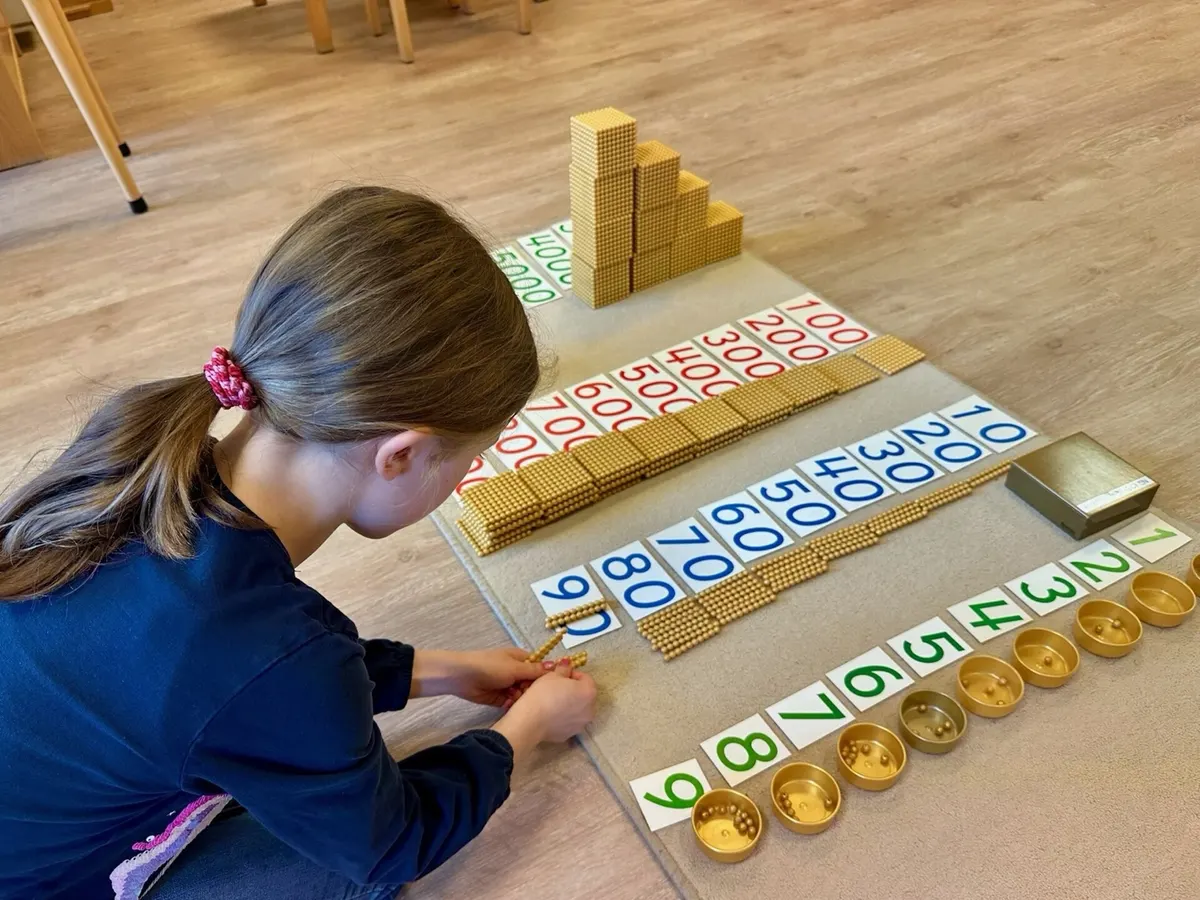
What they work with
In the Montessori room we introduce the children deliberately to the materials for mathematics and language. They are the same ones the schoolchildren use later — so the transition is already prepared in substance.
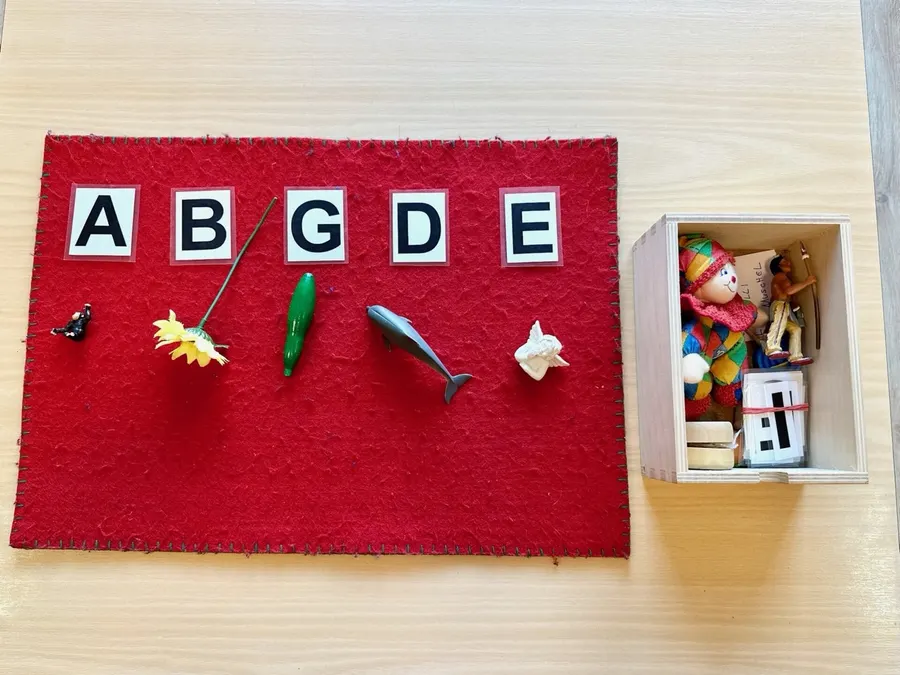
- Language
- With the sandpaper letters, children from around four are familiar with many letters and their sounds. They break words down into individual sounds and put them back together in their first reading.
- Mathematics
- Number rods, the bead material and the bead clown make quantity something to grasp. The sandpaper numerals introduce how figures are written, and the addition and subtraction boards the first ways of calculating.
- Cosmic education
- Maps, the seasons, work with time and the calendar: the children place themselves and their world — and are given the wider frame into which everything else will later fit.
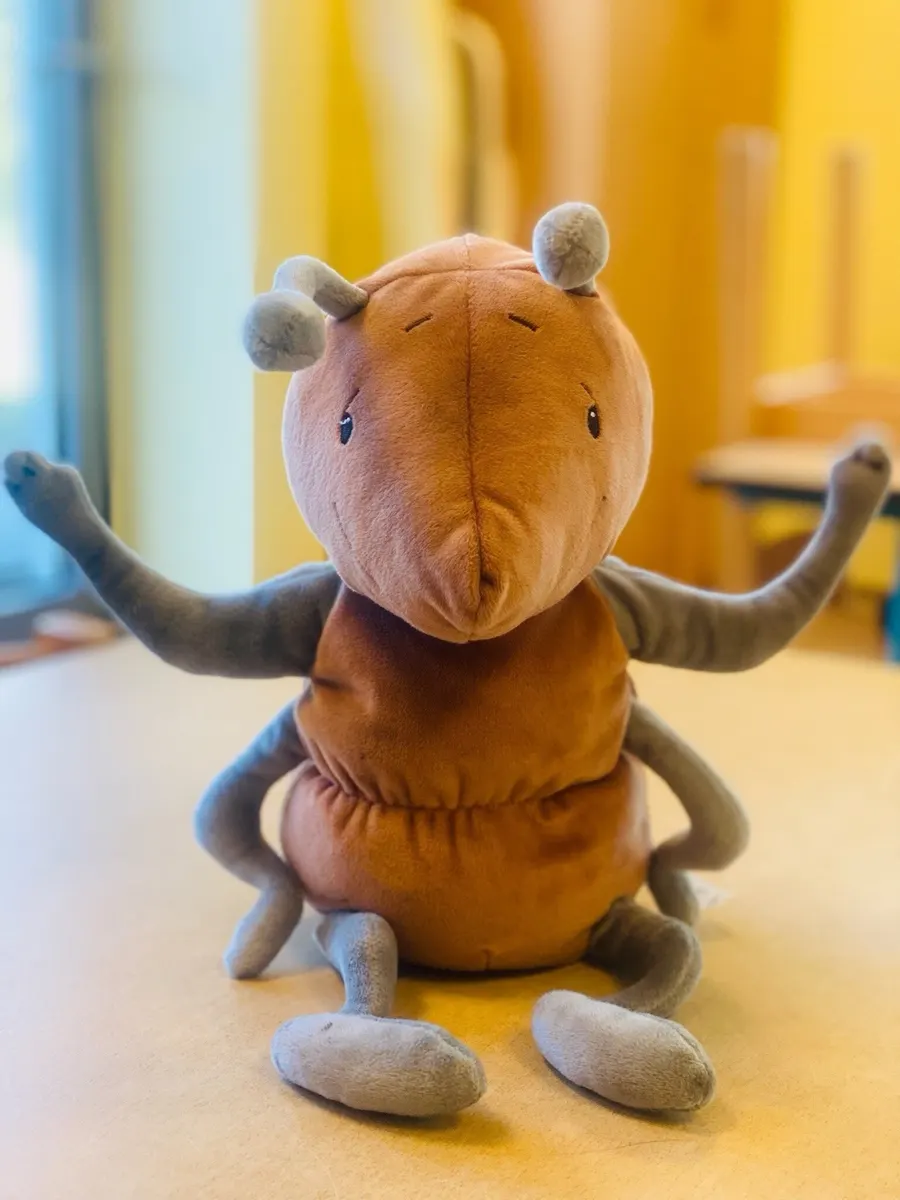
Researching with Fred
Fred is a curious ant. At the start of each session the children hear a story about him — and are then left with a question they have to answer themselves.
Fred and his friend Paul want to cross the lake by boat. Which material floats and carries their weight at the same time — wood, stone, a coin, ice or a marble? The children first make predictions, then set up the experiment, record it in writing, and finally check whether they were right.
At the end of the year the children show their parents what they found out — and receive their researcher's certificate.
Also in the final year
Acting within a group, resolving conflict, voicing one's own needs and letting others' views stand — through respectful conversation, not by instruction.
In the last six months before school, the pre-school children visit places of learning beyond the Children's House.
Optional for children between four and four and a half: their language development is assessed, which may indicate whether speech therapy would help.
Interwoven, not waved off
The Children's House and the primary school have shared a roof since 2001, and we make use of it: the pre-school children join the holiday and Advent singing, come to sports day, sit in on special presentations and act as reading buddies.
Parents have an evening of their own, run jointly by the educators and the teachers, along with handover conversations about every individual child.
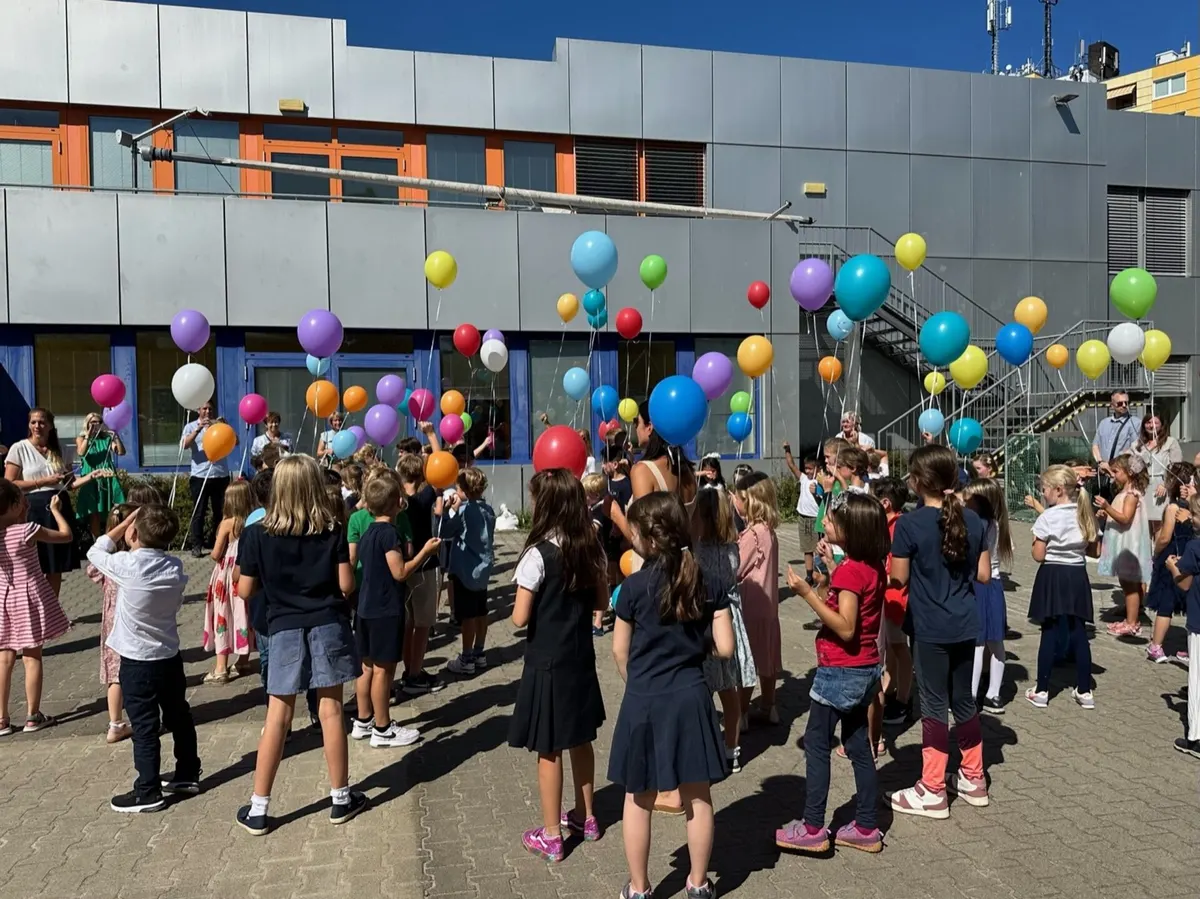
How we prepare for the start of school
Starting school well takes more than a timetable.
- 1Taster days
Before the summer holidays the children sit in on exactly the class they will join afterwards. Teachers, rooms and classmates are no longer strangers.
- 2Buddy scheme
Every new child is given a buddy from year 2 — for the first few weeks, for the walk to the sports hall, and for all the questions you do not ask an adult.
- 3Getting-to-know-you afternoon
Families and teachers meet before the summer holidays. At the parents' evening, how we work and how school begins are set out.
And right at the beginning?
The very first transition is accompanied too — whether your child was previously at home, with a childminder, or in a nursery for under-threes. Settling in follows a set process, and parents receive a guide to it beforehand.
Request a place